

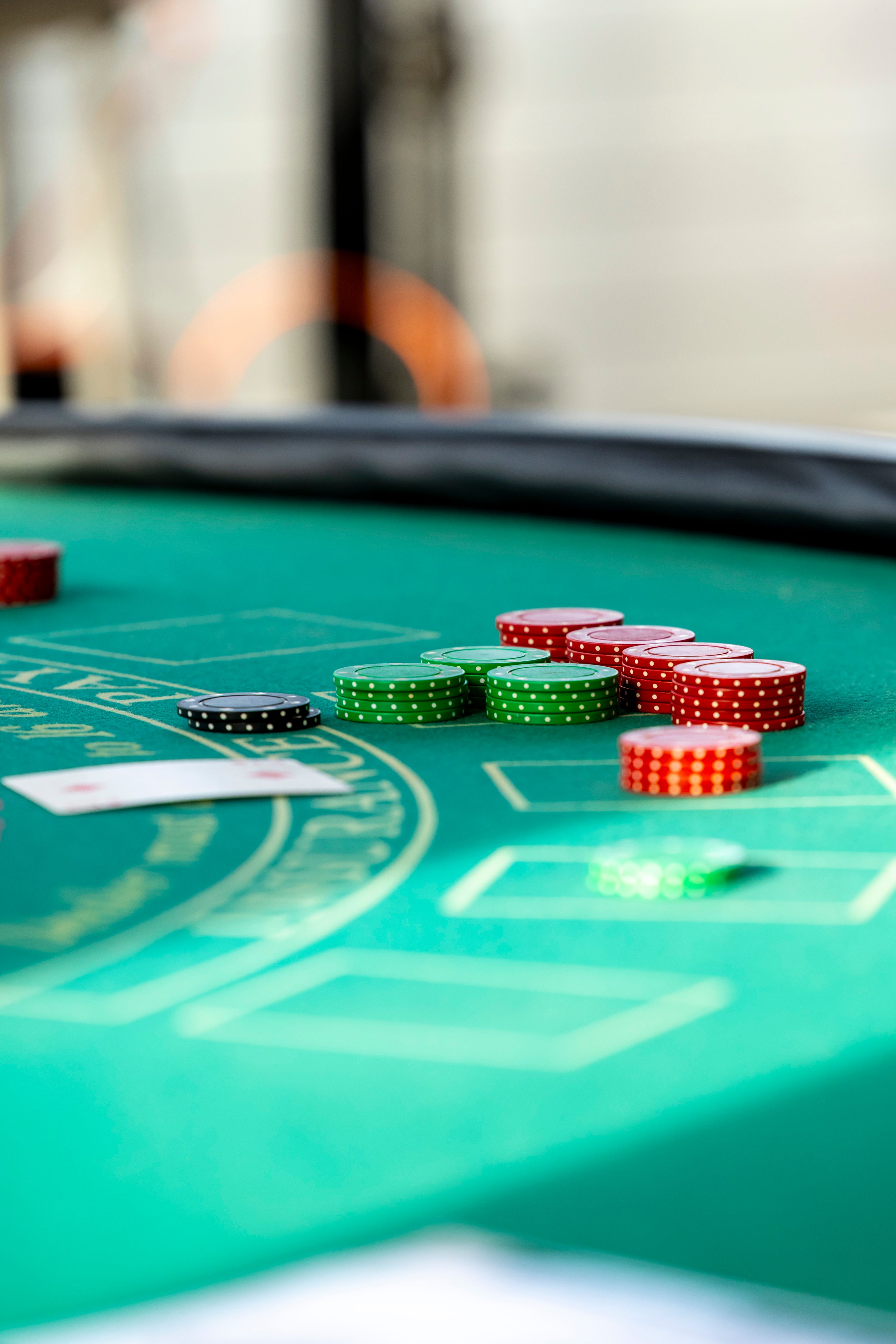
When you spin a slot reel or view a digital roulette wheel come to rest, an invisible force decides the outcome in a tiny part of a second twindors.net.pl. That force is a random number generator, the heartbeat of every honest online casino. We depend on these algorithms to deliver results that are genuinely unpredictable, fair, and free from outside interference. At Twindor Casino, we understand that trust is built on transparency, so we intend to pull back the curtain and demonstrate you clearly how RNG technology works, why it is examined so rigorously, and what it means for your real-money play. Comprehending the engine behind the games changes a simple pastime into an informed, assured experience. We welcome you to delve into the science that assures every card dealt and every symbol stopped is the real deal.
In what manner RNGs Guarantee Fairness in Internet Casino Games
Equity in the online gambling world does not mean that every player wins equally. It indicates that every outcome is derived from a predetermined set of probabilities that align with the game’s design, and that no external force distorts those probabilities in favor of the house beyond the built-in edge. The RNG’s job is to select outcomes at rates that, over millions of rounds, will settle to the theoretical return to player percentage. For example, if a slot has a theoretical RTP of 96%, the RNG must allocate symbols and reel stops so that over an enormous sample the average payback remains around that figure. Without an unbiased RNG, the whole concept of RTP becomes irrelevant, which is why we consider RNG integrity as the basis of our entire gaming portfolio.
Fairness also applies to the sequence of events. In a game of blackjack, the RNG replicates a randomized shoe so that every card order has an equal chance of occurring. In roulette, the probability of each number landing aligns with the wheel’s physical layout. The algorithms are benchmarked against millions of simulated rounds to ensure that no number, suit, or symbol appears more often than pure chance would prescribe. When you play at Twindor Casino, you can see the return-to-player percentages for most games, and you can trust those numbers because they are backed by RNGs that have been tested by statistical tests far harsher than anything you would face during normal play. This is not marketing fluff; it is a regulatory requirement in all major licensing jurisdictions.
The RTP Link
RTP is often misinterpreted as a short-term guarantee. In truth, RTP is an resulting characteristic: the RNG does not “target” for a certain payout percentage on any particular spin or session. Instead, it guarantees that each combination of symbols or each winning number shows up with its designed occurrence, and that occurrence, when calculated by the relevant payouts, produces the overall average. A volatile slot, for illustration, will provide larger but sparser wins, while a low-volatility game yields tinier, more consistent payouts. Both can share the identical RTP, and the RNG provides the mathematical deviation that renders each game style authentic. Without a correctly working RNG, the volatility model collapses, and the game no longer behave as promoted.
We continually encourage players to consider RTP as an helpful reference rather than a session report. The RNG guarantees the long-term honesty, but your individual results will vary around that average in ways that make every session distinct. This randomness is precisely what makes casino gaming enjoyable. At Twindor Casino, we offer RTP data so you can have informed selections about which games suit your risk appetite, aware that the numbers behind the surface are verified by independent testing labs. The link between RNG performance and RTP disclosure is direct and auditable, a sequence of evidence we are honored to support.
Reasons Third-Party Testing Is Important
Even the most solidly coded RNG would be pointless without external verification. Independent testing agencies put the algorithms through a series of assessments that include diehard statistical tests, chi-squared analyses, and long-run simulations that cover billions of rounds. They also inspect the source code for hidden backdoors or logical flaws that could be exploited. When a game passes these tests, it gets a certification mark that acts as a mark of fairness. For you, that mark means you are not relying on a casino’s word for it — you are counting on mathematics and engineering scrutinized by experts who have no financial stake in your wins or losses. This separation of interests is what converts a piece of software into a trusted gambling product.
At Twindor Casino, we only feature games from providers whose RNGs are certified by at least one internationally recognized testing house. This requirement is embedded into our licensing obligations, and we take it further by conducting regular internal reviews of the certification status. Every time a game is updated or a new title is added, the RNG must be recertified. When you log in and open a slot or table game, you are encountering a product that has survived a level of mathematical scrutiny most people never encounter. That fact alone should give you the assurance to focus on the fun rather than questioning whether the deck is stacked beyond the known house edge.
The Role of RNG Technology at Twindor Casino
As you enter the Twindor Casino lobby, you step into a space built on a foundation of certified randomness. We do not create our own RNGs; rather, we integrate games from top-tier software providers who have already run their algorithms to the most demanding independent audits. Our role involves curating a library of slots, table games, video poker, and specialty titles that all possess the necessary certification. This means each spin on a Starburst slot, any hand of European Blackjack, and every virtual scratch card you open runs on an RNG that has been tested for fairness by labs like eCOGRA or iTech Labs. We choose partners who share our commitment to transparency because we understand that a single questionable game would undermine the trust that takes years to build.
Our platform functions under a trusted international gaming license, requiring mandatory RNG testing and ongoing compliance reporting. This license requires us to separate operational control from game logic; we cannot modify the RNG output or alter payout structures. The server connects to our platform, but the outcome generation remains locked within a sealed software module. From your perspective, this implies the session is exactly what the game developer intended, free from any operator-side interference. We also guarantee that our systems support independent verification by allowing testing agencies to tap into live game data. If you ever have questions about a specific title’s certification, our support team is trained to provide the pertinent facts and point you toward the authorized test reports.
Our Gaming Partners and Their RNG Standards
We work with studios that are household names in the online gaming world, all of which function under the same certified RNG principles. While we cannot name every partner here, you can count on to find games from developers who have invested heavily in random number generator research and who send their products to multiple testing agencies. These providers build their slots and table games using battle-tested algorithms that generate numbers thousands of times per second, with seeds drawn from high-entropy sources. Their RNG technology is not a marketing afterthought; it is the core intellectual property that characterizes their brand. When you enjoy a title from such a developer, you are experiencing over a decade of engineering refinement aimed at delivering genuine unpredictability.
We sustain a close relationship with our providers’ technical compliance teams. Whenever a new game is added to our catalog, we confirm that its RNG certification is up to date and that its theoretical RTP corresponds to the value published in the game’s help section. This internal gatekeeping step provides an extra layer of assurance beyond the external audit, bridging any gap between what the provider claims and what goes live on our site. You may not notice this process, but you will feel its effect: a seamless, worry-free session where you can lose yourself in the gameplay rather than doubting the fairness of each outcome.
Live Dealer vs. RNG Games at Twindor
Our live casino section takes a different approach to fairness, but it is just as thorough. Live dealer games like roulette, blackjack, and baccarat broadcast from professional studios where real dealers use real wheels, cards, and shuffling machines. In this environment, randomness comes from the laws of physics rather than an algorithm. Cameras record every move, and optical character recognition decodes the results. While no PRNG is involved in live dealer gameplay, the equipment and procedures are routinely examined by the same independent testing agencies. We provide both live and RNG-powered versions of classic table games so you can pick the atmosphere that fits your style. If you prefer speed and low-stakes flexibility, RNG tables are optimal; if you seek human interaction and the theatre of a real casino, live dealer is your stage.
The coexistence of RNG and live games demonstrates how earnestly we handle fair play across all formats. You can transition between the two aware that in RNG mode the mathematics are verified, and in live mode the physical integrity is verified. No matter which you pick, our licensing terms require that the outcomes are random and beyond our control. This dual approach also enables us to serve every playing style. Whether you prefer the solitary focus of a digital table or the social energy of a live stream, the result is the same: an unbiased playing field where your decisions and luck, not manipulation, determine the session.
Common Myths and False beliefs About RNGs
Regardless of the technical certainty behind current random number generators, a set of enduring myths remains in casino culture. These false beliefs often originate from how our brains naturally look for patterns, even where none are present. When we see a slot go cold for fifty spins, the intuitive but incorrect inference is that the machine is “due” for a win. In truth, the RNG handles each event as an separate event with no recollection of what came before. This fact feels counterintuitive, which is why myths endure. Breaking them down is not about dismissing player experience; it is about providing you with the facts so you can appreciate the games without false assumptions. At Twindor Casino, we maintain an informed player is a happier player, so let us tackle a few of the most prevalent fallacies head-on.
Misconception: The Casino Can Toggle a Setting to Make You Lose
This is arguably the most enduring and most entrenched fear in online gambling, and it is wholly unfounded in a authorized, certified environment. The RNG modules used in regulated casinos are sealed pieces of software that cannot be changed in real time without breaking the digital signatures that testing labs verify. Any change would require the game to be taken offline, re-certified, and re-deployed — a process that would not go unnoticed by the auditors who continuously monitor live data feeds. Moreover, the business model of a legitimate casino does not depend on making you lose on demand. The house edge, built into the game’s math, ensures profitability over millions of rounds. We do not need to cheat you; the mathematics already provide our margin, and cheating would only destroy the trust that keeps players returning.
Additionally, the gaming license under which we operate includes severe penalties for operators who tamper with game outcomes. Fines, license revocation, and legal action are real consequences that no reputable casino would risk for short-term gain. We invite you to check the footer of our site for license information and the certifications that support our RNG claims. If an operator were tempted to flip a switch, the entire industry infrastructure is designed to catch them long before players would be affected. Every time you win a jackpot or hit a lucky streak at Twindor Casino, you can celebrate knowing that the outcome was as random as it was supposed to be.
Myth: Patterns in Previous Outcomes Predict Subsequent Results
One of the most prevalent cognitive biases gamblers face is the belief that a sequence of reds on the roulette wheel makes black more likely next. The RNG has no awareness of past results, and the probability of each number remains constant from spin to spin. Displays of hot and cold numbers, while entertaining, describe what has happened, not what will happen. This holds true for slots as well: seeing a particular symbol miss for hundreds of spins does not make it “overdue.” The RNG’s independence property guarantees that the probability of that symbol landing on the next spin is identical to what it was on the very first spin. Recognizing this truth can save you from costly betting systems that pretend to beat the unbeatable.
Roulette players sometimes record meticulous records, persuaded they see a skewed wheel online. But digital roulette RNGs are tested for uniformity so thoroughly that any persistent bias would be flagged and resolved. If you enjoy tracking numbers as part of the custom, that is completely fine, as long as you keep in mind it is a kind of entertainment, not a strategy. At Twindor Casino, we provide such statistics because they contribute to the fun, but we also make clear that the next outcome is always a fresh roll of the digital dice. The only pattern in a adequately functioning RNG is the absence of any pattern at all.
Misconception: Betting at Particular Times of Day Influences RNG Behavior
Some players believe that casinos modify difficulty during peak hours or ease games in the early morning to lure play. This myth presupposes a level of real-time control that simply does not appear in certified software. The RNG does not know what time it is, how many people are online, or how much money is moving through the system. Its output is determined by a seed that takes from system entropy, not from the casino’s financial dashboard. In testing environments, the RNG output is intentionally collected at all hours and contrasted to guarantee that no time-dependent variance arises. The statistical tests would catch even a minor diurnal pattern, and none has ever been observed.
What players sometimes interpret as time-based luck is actually the natural fluctuation of variance. If you log in at 2 a.m. and achieve a quick winning streak, your brain may associate the two events, but the RNG was just doing what it always does. We recommend you to gamble when it fits your schedule and mood, free from superstitions about prime winning hours. The games at Twindor Casino offer the same certified randomness around the clock, because fairness is not a scheduled event — it is the constant state of our platform.
How Does a Casino Random Number Generator Work?
A casino random number generator is a sophisticated algorithm created to create a sequence of numbers that lack any pattern or predictability. In land-based machines, physical processes can generate randomness, but in the online space, the digital environment demands a mathematical approach. At its core, an RNG takes an initial value called a seed and passes it through complex formulas to create an output that appears completely random. This output then maps to a game event, such as the stop position of a slot reel or the card drawn from a virtual deck. The speed is almost instantaneous, with thousands of numbers generated every second even when no one is playing. That constant generation is what makes it impossible to time a spin or predict when a jackpot will hit, protecting the integrity of every round you play.
We often differentiate between two types of RNGs: pseudo-random number generators and true random number generators. In a casino context, nearly all digital games utilize pseudo-random generators since they are tested and certified for fairness. A true random generator is based on a physical source of entropy, like atmospheric noise or radioactive decay, which is harder to implement and audit for compliance. PRNGs, though deterministic in nature, are designed with such complexity that their output becomes statistically indistinguishable from true randomness. The seed value, usually derived from high-precision system clocks or user input combined with hardware noise, changes continuously. This ensures that even if you knew the algorithm, predicting the next result would require computational power that simply does not exist in real time.
PRNG vs. TRNG: How Do They Differ?
Pseudo-random number generators use a predictable algorithm, implying the same seed will always produce the same sequence. That sounds alarming, but in practice the seed is renewed so regularly and taken from unpredictable system states that the sequence never duplicates in a way a player could exploit. True random number generators leverage physical phenomena that are fundamentally unpredictable according to quantum mechanics. While TRNGs seem superior, they are rarely used for game outcomes because their output rate can be slow, and verifying their fairness to gaming regulators is far more complex. PRNGs lead online casinos precisely because they are reproducible for audit purposes, enabling testing labs to verify the distribution of millions of outcomes. That reproducibility is what provides you, the player, concrete proof of randomness rather than just a philosophical claim.
The distinction matters because when we claim an RNG is certified fair, we mean that a respected lab has analyzed the algorithm, the seeding mechanism, and the long-term statistical output. They validate that the PRNG cannot be reverse-engineered during live play and that the game’s return to player corresponds to the theoretical model. Whether it is a slot from a studio like Pragmatic Play or a virtual blackjack table, the underlying technology observes the same rigorous design principles. So even though the numbers are generated by a computer program, the safeguards are so strict that the practical randomness is every bit as reliable as shuffling a physical deck by hand — and far more traceable.
The Role of the Seed Number
Starting points are the starting point of every PRNG calculation, and their unpredictability is the linchpin of fairness. Modern casino software derives seeds from a mix of high-resolution timers, user interface events, and hardware entropy sources. For example, the exact millisecond a player clicks the spin button might be combined with thermal sensor data from the server farm to create a value that no human or software can guess. Once the seed is fed into the algorithm, it generates a stream of numbers that determine reel positions, dice rolls, or card sequences. What is critical for security is that the seed changes thousands of times per second and is never reused. This means each game round is completely independent, eliminating any possible chain of correlation between your previous bet and the next outcome.
Comprehending the seed helps refute the myth that casinos can “tweak” results mid-session. Because the seed is taken from continuously shifting conditions and the RNG output is verified by independent testers, altering the algorithm would break the certification seals and trigger immediate flags. At Twindor Casino, we never touch the core RNG — it runs exactly as supplied by the game developer, sealed and audited. This is why we can confidently state that every spin, every hand, every dice throw is the product of pure mathematical randomness, not an operator’s whim.
Analyzing the Math: How RNGs Drive Slot Machines, Roulette, and Table Games
The manner an RNG in practice transforms numbers into game results varies by game type, but the principle remains the same: each possible result is assigned a range of numbers relative to its probability. If you imagine a slot with 100,000 possible reel stop combinations, the RNG will create a number between 0 and 99,999, and that number maps directly to one specific combination. The mapping is fixed in the game’s math profile, and it never changes during play. This means that a jackpot symbol combination might take up only a handful of those 100,000 slots, making it genuinely rare, while low-value symbols cover the map. The mapping is what provides the game its volatility and hit frequency, and it is all grounded by the random sequence coming from the generator.
Because the RNG runs continuously, the specific moment you press “spin” or “deal” takes a number from the continuous stream and fixes it as the seed for that round. This technique makes it not possible for a player to affect the outcome through timing or bet size changes, and it also stops the casino from tampering with results on the fly. We consider this architecture refined: a purely mathematical system that mimics physical randomness so well that even the most skeptical auditor cannot discover a pattern. Every game category gains from this approach, though the specifics of how that number becomes a visual result vary enough to warrant a closer look.
Random Number Generators in Slot Machines
In modern video slots, the RNG usually creates a separate number for each reel, or it chooses a single number that references an entire reel set from a massive lookup table. The reel strips you see spinning are animations; the outcome is determined the instant you press the button. The visual spin is a presentation layer that creates anticipation but does not impact the math. This architecture lets developers design games with cascading symbols, expanding wilds, and bonus buy features, all of which still lead to a single random draw that aligns with the game’s probability tables. The RNG guarantees that every spin is independent, meaning that going ten dead spins without a win does not make the eleventh spin any more likely to pay out — a concept we term the independence of trials.
Game creators frequently include mechanics like Megaways engines, which change the number of symbols per reel on every spin. Even here, the RNG handles the work by selecting a random configuration from tens of thousands of possibilities before mapping symbols onto the altered reel set. The result is that a single game can offer 117,649 ways to win or more, all regulated by the same certified algorithm that runs a classic three-reel fruit machine. At Twindor Casino, our slots lobby covers everything from simple retro games to feature-rich video slots, and the fairness guarantee is identical across the board. Every title has a certificate that validates its RNG has been examined for statistical randomness and proper implementation of the stated RTP.
Random Number Generators in Table Games
Casino table games like roulette, twenty-one, and baccarat games use RNGs to reproduce physical random processes with exacting precision. For digital roulette, the RNG chooses a number from 0 to 36, and it ensures that over a billion spins each pocket appears with a frequency indistinguishable from the expected 1 in 37 or 1 in 38, according to the variant. The algorithm does not care about hot or cold numbers; it simply generates a uniform distribution. In virtual blackjack, the RNG shuffles a virtual shoe of multiple decks using a Fisher-Yates shuffle or an comparable algorithm, guaranteeing that every permutation of cards is equally likely. The shoe is reshuffled after every hand or every few hands according to the house rules, stopping card counting and reproducing the randomness of a freshly shuffled physical deck.
Baccarat games and casino poker variants follow the same logic. The RNG’s role is to produce an unpredictable sequence of cards, and the game software applies the drawing rules automatically. You never have to question whether the deck is marked, because the deck does not physically exist — it is a mathematical construct audited for fairness. We understand that some players appreciate the ritual of live dealer tables, but when you select an RNG-powered table game at Twindor Casino, you get faster rounds, lower minimum bets, and the ability to play at your own pace. The fairness is not diminished; it is simply achieved through a different, equally reliable mechanism.
Video poker machines and Specialty Games
Video poker sits at the intersection of slots and table games, and its RNG works by dealing cards from a virtual deck that is continuously shuffled. The initial five-card hand is selected randomly from a full 52-card deck, and then the replacement cards are selected from the remaining 47 cards without any memory of the discards. This mirrors a real-world draw poker scenario so accurately that optimal strategy calculations are the same whether you play against an RNG or a physical deck. The pay tables are established, and the RNG guarantees that each card is distributed with the exact probability the math dictates. Because the returns are so obvious, video poker is a popular choice among players who want to confirm the house edge themselves, and we view this as a testament to the power of a trustworthy RNG.
Specialty games like keno, virtual scratch cards, and crash games also depend on RNG output that is mapped to their unique probability tables. In keno, the RNG selects numbered balls from a field of 80, and the mapping distributes wins according to how many of your picks match the drawn numbers. Crash games use RNGs to calculate the multiplier at which the graph will stop, with the probability of higher multipliers declining in a mathematically defined way. All these genres live inside the same fairness framework. When you explore our full game library, you are discovering an ecosystem where every result, from the simplest scratch card to the most complex bonus round, is generated by code that has passed the same uncompromising tests.
What This Implies for Your Gameplay: Safe Gambling and Intelligent Bankroll Strategy
Comprehending the operation of random number generators goes beyond satisfying technical curiosity; it transforms how you handle the games on a practical level. When you fully accept that each outcome is independent and that the house edge operates over massive sample sizes, you can establish realistic expectations and build a bankroll strategy that emphasizes entertainment value. We encourage you to view your gaming session not as a battle to beat the RNG, which is mathematically impossible in the long run, but as a leisure activity where the thrill comes from the uncertainty itself. With this mindset, losses become the cost of a fun experience, and wins become delightful surprises rather than a sign that you have deciphered a code.
At Twindor Casino, we provide a suite of responsible gaming tools that enhance the fair RNG environment. You can establish deposit limits, loss limits, and session time reminders directly from your account. These features assist you maintain your play within boundaries you define, ensuring that the random outcomes never translate into unintended financial strain. We also present self-exclusion options and links to professional support organizations. Because the games are genuinely random, no amount of data analysis will offer you an edge, so the healthiest strategy is to determine in advance how much you are willing to spend and to regard that amount as your entertainment budget. The RNG will perform its job; your job is to handle the human side of the experience.
When you integrate responsible gaming tools with a clear understanding of RNGs, you unlock a more relaxed, confident style of play. You can select games based on theme, volatility, and RTP without seeking impossible guarantees. You can enjoy a slots session knowing that a big win is always possible on any single spin, but never something you can make happen. This balanced perspective is exactly what we strive to develop at Twindor Casino. We believe that a casino should be a place of excitement, transparency, and control — and that begins with equipping you with the facts about how the games truly work.
Making Your Next Step with Assurance
Now that we have explored the operations of random number generators, from seed entropy to certification badges, you can see that every spin, every hand, and every dice roll at Twindor Casino is backed by mathematics that are as solid as they are audited. The next time you load a game, you are not just pressing a button; you are interacting with a finely tuned system of probability that has been examined by some of the sharpest minds in the industry. Our commitment to certified RNG technology, transparent RTP information, and responsible gaming tools means you can focus on what really matters: enjoying the gameplay, exploring new titles, and celebrating the wins that genuine randomness brings your way. Take a moment to browse our game lobby, check the RTP values, and set your personal limits. Then lean into the thrill of the unknown, knowing that every outcome is fair, unpredictable, and yours to experience. That is the promise we make to every player who calls Twindor Casino home.
RNG Verification and Certification: Who Checks the Games?
External testing agencies are the guardians of randomness in the digital casino industry. These firms utilize math experts, crypto specialists, and software developers who examine the RNG source code, inspect the seeding process, and run massive-scale simulations. Bodies such as iTech Labs, eCOGRA, GLI, and BMM Testlabs are among the best-known names in the industry. They comply with guidelines set by regulatory authorities, which means a game verified in one controlled territory often carries a comparable level of credibility globally. The testing process typically involves confirming that the RNG creates numbers that meet tests for uniformity, unrelatedness, and unpredictability, and that the game’s execution correctly converts those numbers into the advertised pay table.
When a game passes, it gets a certificate that indicates the tested version, the RTP range, and the duration of validity. Casinos must update these certificates periodically, and any update to the game software triggers a re-certification. From a player’s viewpoint, the most apparent sign of this process is the certification logo frequently displayed in the game’s help pages or in the casino’s footer. At Twindor Casino, we are open about the testing credentials of our game partners. We feel you should never have to look for this information, so we keep it accessible and easy to understand. An untested game simply does not enter our lobby, because fairness is not negotiable.
Major Testing Agencies You Can Count On
- eCOGRA – Specializes in player protection, fair gaming, and responsible operator conduct. Their seal signifies that game RNGs and payout percentages have been independently verified.
- iTech Labs – An Australian-based tester that carries out rigorous statistical analysis for online casinos worldwide. Their reports are approved by many of the strictest licensing jurisdictions.
- Gaming Laboratories International (GLI) – One of the oldest and most respected testing labs, GLI delivers comprehensive certification covering RNG, platform security, and game logic.
- BMM Testlabs – A globally active lab that certifies land-based and online systems, ensuring RNG compliance across multiple regulated markets.

These organizations are not employed by the casino or the software provider; their revenue is not tied to a game passing. The relationship is structured so they can fail a product without financial pressure, and their reputation hinges on catching flaws before players ever encounter them. When you see a certification badge from any of these labs, you are seeing the end result of a process that may have involved months of testing and billions of simulated rounds. It is the highest available evidence that the RNG is not a gimmick but a rigorously proven engine of chance.
The Process of an RNG Audit
An RNG audit starts with a code review, where testers examine the algorithm for predictability. They determine whether the output can be influenced by external inputs, whether the seed is generated from a sufficiently high-entropy source, and whether the number sequence can be predicted by analyzing previous outputs. Next comes a statistical battery that may include the Diehard tests, NIST test suite, and chi-squared goodness-of-fit tests, all created to detect subtle biases that no human player would ever observe but that could, over billions of rounds, tilt the odds. The lab also replicates the game environment to ensure that the mapping from RNG output to game result matches the paytable exactly. Even a single misconfigured symbol weight is identified and must be corrected before certification is granted.
Beyond the first certification, periodic monitoring maintains ongoing compliance. Many labs feature automated tools that extract live game data from the casino’s platform and match the actual payouts against the theoretical model. If a drift is found, an investigation is started immediately. This uninterrupted oversight closes the loop between the certificate on paper and the experience you have at the reels or tables. At Twindor Casino, we back this monitoring because it aligns our interests with yours: a verified fair game is the only kind of game that establishes lasting trust, and trust is what brings players back. We never interfere with the monitoring feed, and we urge you to review publicly available payout reports whenever curiosity strikes.